
Selling digital products is one of the most accessible business models around right now. No inventory, no shipping, no storefront lease. You create or acquire a product once, and you can sell it thousands of times. But if you've never done it before, it can feel like there are a hundred things you need to figure out before you can even start.
This guide cuts through the noise. Here's how to actually get started — step by step.
Step 1: Understand What a Digital Product Is
A digital product is anything that's delivered electronically. That includes:
- Courses and video training — probably the most popular category right now
- Ebooks and guides — PDF documents covering a specific topic
- Templates — Canva designs, spreadsheet trackers, email scripts
- Presets and tools — Lightroom presets, Notion dashboards, prompt packs
- Music, audio, or stock assets — anything a creator would use
The key advantage over physical products is the margin. Once a digital product exists, the cost to deliver it to the next customer is essentially zero.
Step 2: Pick Your First Product (Don't Overthink This)
First-timers often get stuck here. They want to create the perfect product before launching anything. Don't.
You have two options:
Option A: Create your own. This works well if you have genuine expertise in something — a skill, a workflow, a process — and you can teach it clearly. An ebook, a mini-course, or a template pack can be built in a weekend.
Option B: Use a product with resell rights. This is where Master Resell Rights (MRR) comes in. With an MRR product, you purchase a course or resource that already exists, and you gain the legal right to sell it and keep 100% of the revenue. This lets you skip the content creation phase entirely and go straight to marketing.
For most beginners, Option B is the faster path to a first sale.
Step 3: Set Up a Simple Storefront
You don't need a custom website to start. The fastest options in 2026 are:
- Stan Store — the most popular choice for creators. You can have a functional store live in under an hour.
- Systeme.io — great for building simple sales funnels alongside your store
- Gumroad — extremely beginner-friendly, handles payments and delivery automatically
Pick one and get your product listed. The perfect platform doesn't exist — the best one is the one you'll actually use.
Step 4: Write a Product Description That Converts
This is where most beginners undersell themselves. A good product description answers three questions:
- What problem does this solve? Be specific. "Learn how to build a digital product business" is vague. "Launch your first digital store in 24 hours, even if you've never sold anything online" is concrete.
- Who is it for? Name your customer. People trust products that feel like they were made for them.
- What will they be able to do after buying? Focus on outcomes, not features.
Keep it honest and direct. Buyers in 2026 have sharp radar for hype.
Step 5: Choose One Marketing Channel and Commit
This is the step where most beginners give up too early. They post once or twice, don't see sales, and conclude it doesn't work.
Marketing is a volume game, especially at the start. Pick one channel:
- TikTok / Instagram Reels — highest organic reach right now for beginners with zero followers
- Pinterest — slower build, but traffic is evergreen and compounds over time
- Email list — low volume early, but your most loyal buyers will always come from here
You don't need to show your face. Faceless content — text-on-screen videos, voiceovers, aesthetic B-roll — performs well on every platform.
Post consistently for 60 days before judging results.
Step 6: Handle the Business Basics
You don't need to have everything perfect before your first sale, but you do need:
- A payment processor — Stripe is the standard. Set it up before you launch so money can actually reach you.
- A delivery method — Most platforms handle this automatically, but verify your customer receives access immediately after purchase.
- An email confirmation — Even a simple "thank you, here's your download" email builds trust.
You can add an LLC, a business bank account, and tax setup after you've validated that people actually want to buy what you're selling.
The Fastest Way to Start
If you want a shortcut through all of this, a structured course that walks you through every step — store setup, marketing, email automation, and the content strategy — will save you months of trial and error.
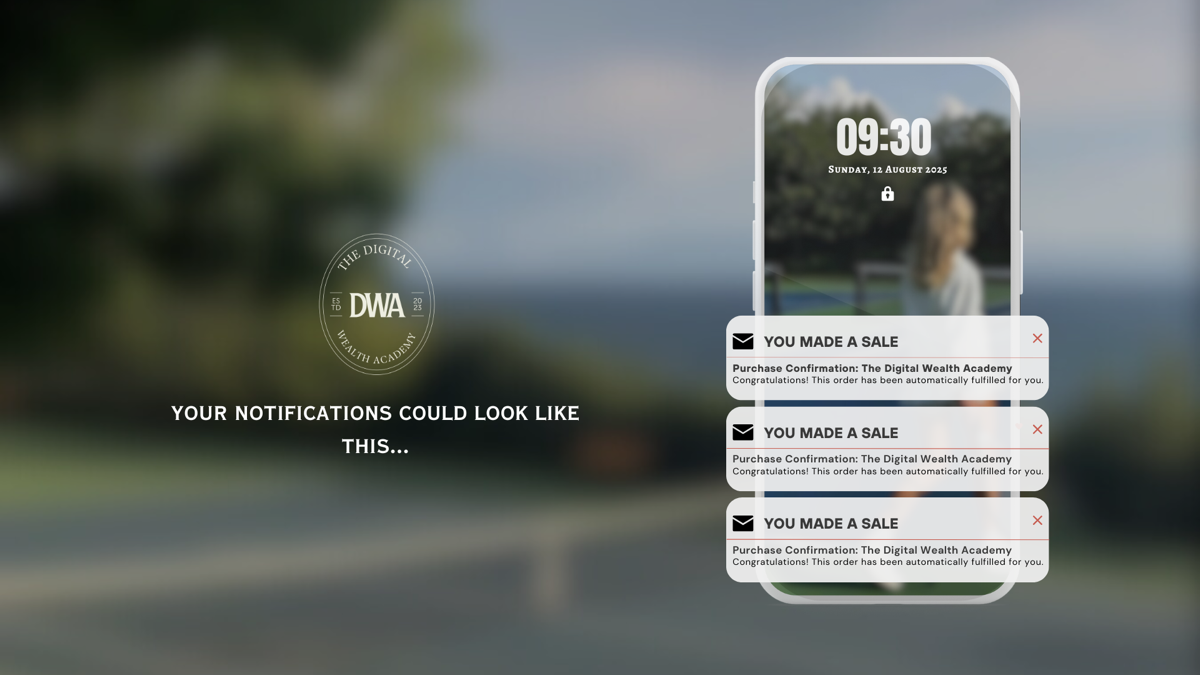
Digital Wealth Academy covers all of it in 48 modules, including a full Faceless Marketing playbook and 30 days of done-for-you content templates. It comes with Master Resell Rights, so you can also sell the course itself and keep every dollar.
Right now it's available for $29 — which is about as low-stakes a way to learn this as I've seen.